
Women Work… The System Doesn’t
International Women’s Day and Labour Day 2026 coinciding is a strong reminder that women’s rights were not handed down but hard won.
It also points out just how far we have far to go.
This year on March 8th and 9th International Women’s Day and Victorian Labour day holiday fell back to back, creating a long weekend dedicated to celebrating and uplifting those who have fought for our social and working rights. It feels fitting then, that the 2026 UN theme for International Women’s Day is Balance the Scales.
If balancing the scales means anything, it means reckoning with the fact that workplace rights were not built on an equal footing. The eight-hour workday shows just that.
Women won the 8-hour workday 26 years after men.
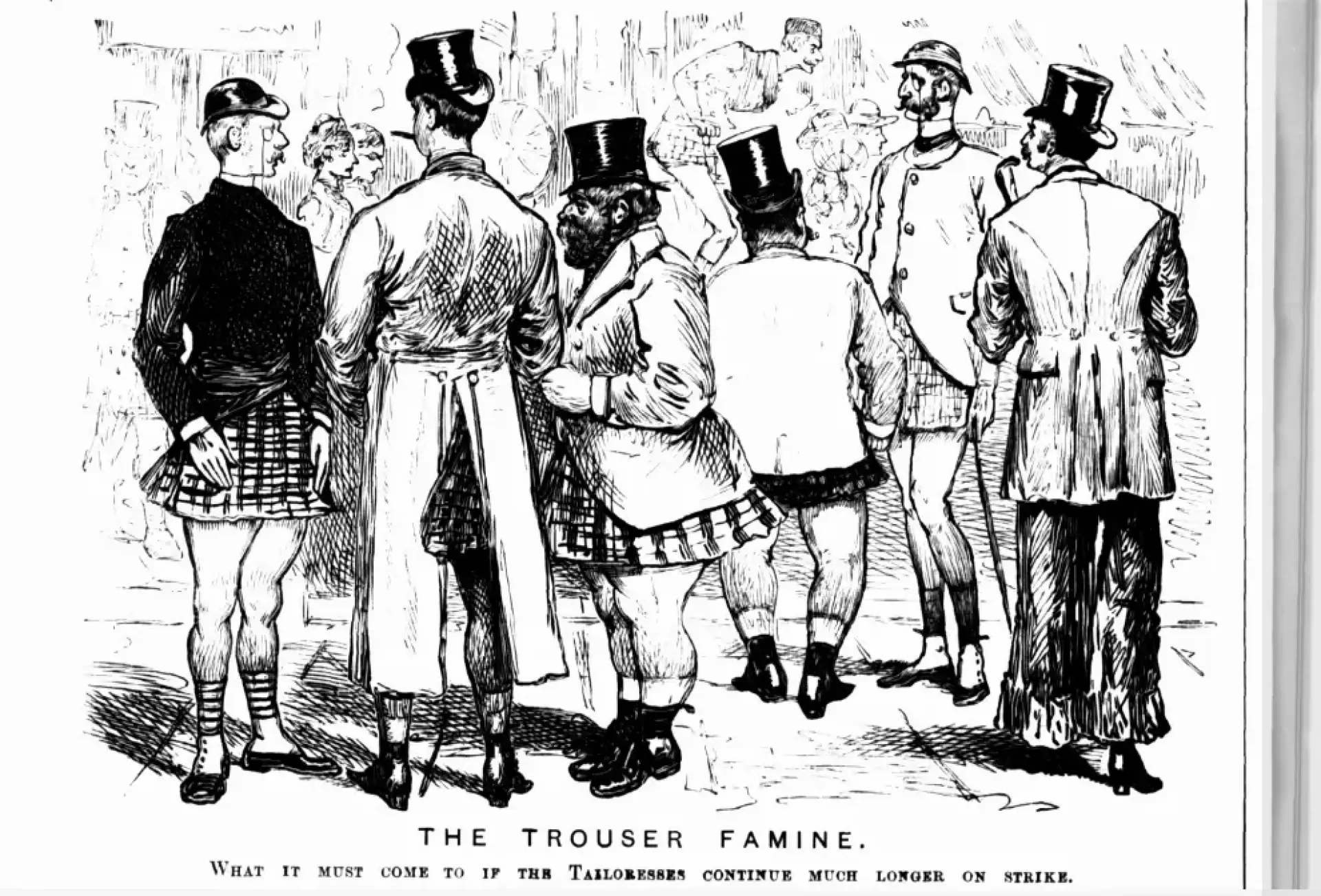
Melbourne tailoresses formed a trade union and called Melbourne's first major strike. Picture: Melbourne Punch/Trove
The 8 hour work day was first introduced in April 1856 after a group of stone masons working on the Old Quadrangle building of the University of Melbourne laid down their tools and together with other labourers, marched down to Parliament House. The eight-hour workday was not automatically extended to women. In 1882, it took the leadership of Ellen Cresswell - founder of the Tailoresses’ union-and her strikes on tailor’s factory floors in Victoria, for women workers to begin securing the eight-hour day, fairer pay and safer working conditions.
The 8 hour Act was eventually passed in Victorian Parliament in 1916, cementing the right to work and rest for everyone. Over the years women’s employment rights and financial security have expanded. From the 1973 Australian Conciliation and Arbitration Commission (ACAC) ruling in favour of equal pay to the anti-discrimination protections in the decades that followed; women have continued to break down employment barriers.
In fact, over 77.5% of women are currently employed – a record high for women’s employment rates.
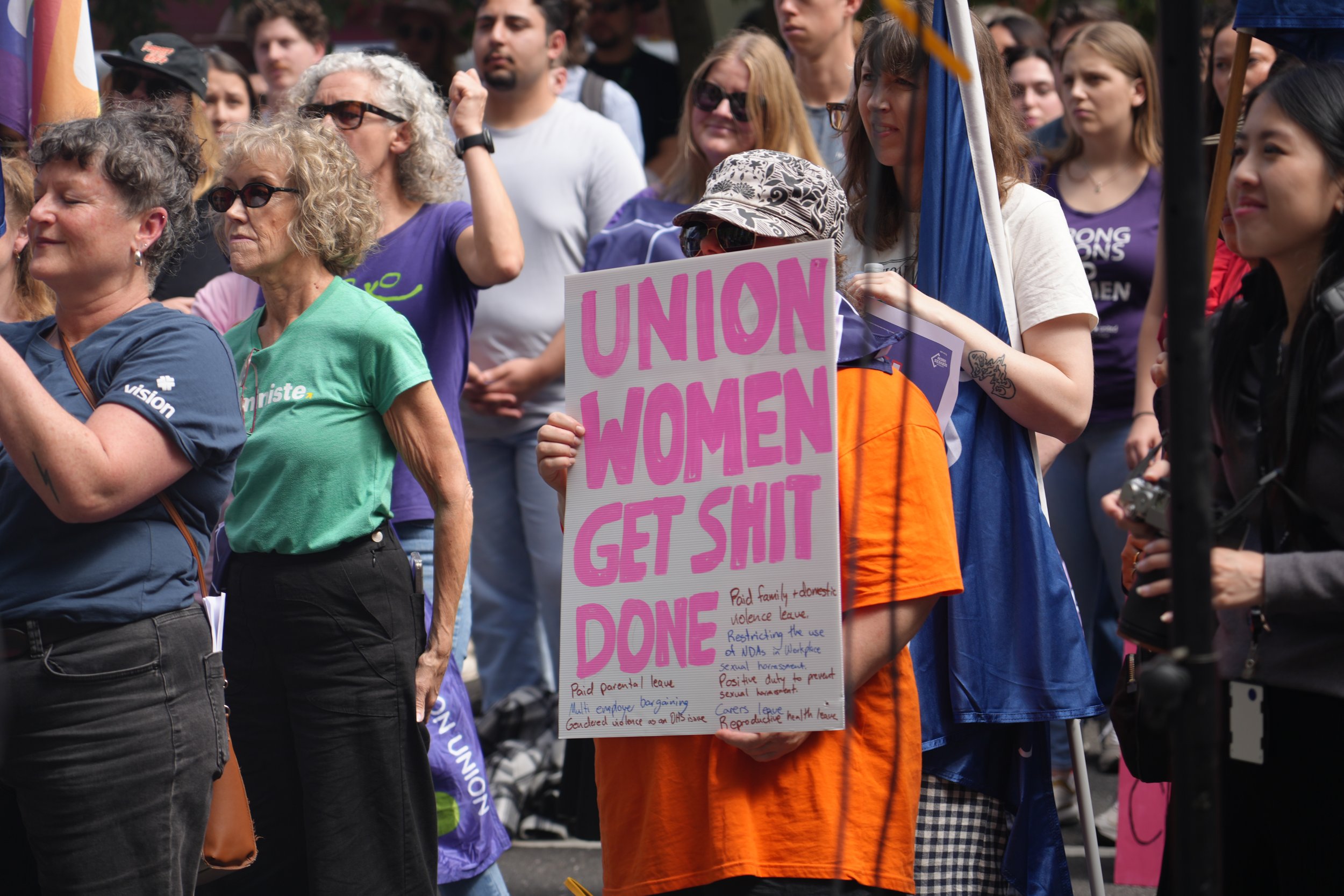
International Women’s Day 2026 rally at Trade’s Hall. Picture: Mairead Foley, Solidarity Solicitors.
Balancing the Economic Scales
According to the 2025 Workplace Gender Equality Agency, every industry pays men more on average than women – even in women dominated fields.
The gender pay gap is more than unequal wages, it’s reflective of who is being promoted, whose work is undervalued and who is being heard. It is also reinforced by workplace cultures tolerating discrimination and harassment.
Approximately 41% of women report experiencing workplace sexual harassment, and almost half of women returning from paid parental leave receive negative comments about part time work or flexible working arrangements. Being able to speak up isn’t always guaranteed, and it definitely isn’t easy. For many women, the cost of labelled difficult, or the risk of losing work trying to seek justice, is enough to keep silent.
Knowing your rights is one thing, but having the support to enforce them is another.
This is where worker advocates, unions and employment lawyers play a critical role. They’re here to support workers navigating their rights, challenge unfair conditions and shift the power back where it belongs - just like Ellen Cresswell did in 1882.
Laura Blandthorn, principal solicitor of Solidarity Solicitors states women should expect to feel empowered to speak up, and to be supported by leaders in the workplace.
“We all have a role to play, whether it is lending an ear to talk through a situation, helping to find practical solutions, or standing together to demand change”, she said.
According to Ms Blandthorn, workplace leaders are the make or break of workplace equality.
“I am particularly passionate about leaders using their power and responsibility to make the workplace fairer. This includes engaging with their team members, listening to them, and challenging the status quo”.
At Solidarity Solicitors, we help employers address workplace inequality by providing practical advice. For women workers, who are disproportionately affected by issues like discrimination, we listen, we believe them, and we help them navigate the legal system to secure change.
Laura’s words speak to a simple truth: fair work and women’s employment rights have always come from brave people stepping forward and demanding change. Progress doesn’t happen by accident. Joining your union is a practical and powerful step in creating safer, fairer workplaces for yourself and others. Union membership provides collective support, advice and will make sure you never face anything alone.
If you’re interested in discussing your workplace concern, book in for a free initial consultation here.
Take Action – Join Your Union
ACTU (find your union directory) : https://www.actu.org.au/directory/