
Safety at Work Starts Here
Last month Solidarity Solicitors was invited to present a workshop on gendered violence in the workplace at Clarence Professional Group.
Principal Solicitor Laura Blandthorn highlighted how gendered violence manifests in workplace settings and the obligations companies must meet to create safe work environments.
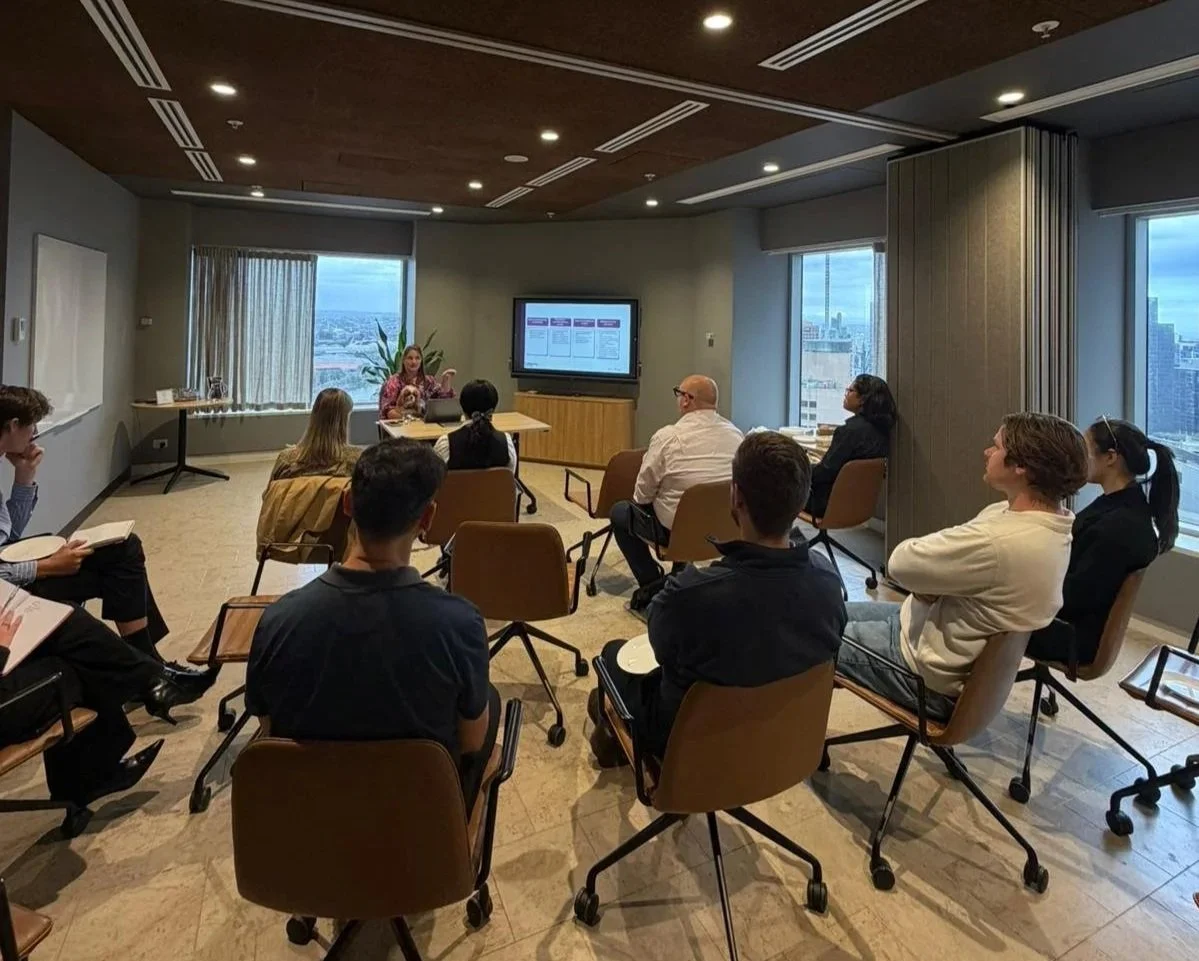
Principal Solicitor Laura Blandthorn presenting workshop on gendered violence at Clarence Professional Group
What Is Gendered Violence
Worksafe defines gendered violenceas any behaviour directed at or affecting a person because of their sex, sexual orientation, gender or gender identity.
These behaviours can range from covert and subtle actions to serious psychological harm and physical violence:
Sexual harassment and assault
Using offensive or sexually explicit language and imagery
Intimidation, stalking or threats
Deliberately misgendering someone via:
Deadnaming
Using incorrect pronouns
Intimidation, exclusion or ostracism
Putdowns, innuendos or inappropriate jokes
Women are disproportionately affected by gendered violence and workplace discrimination, with women 1.5 times more likely to make serious compensation claims for workplace violence and assault than their male counterparts.
People with intersecting identities, such as LGBTQIA+ people, culturally and linguistically diverse communities and migrant workers, also experience higher rates of gendered violence than their cis, straight male counterparts.
Workplace gendered violence is a broader reflection of societal norms. It serves to condone violence against women and normalise rigid gender roles and harmful male peer cultures that reward aggression and control.
As Laura Blandthorn explained,
“Workplaces are central to our daily lives, most people spend at least a third of their day at work. This makes workplace norms particularly influential.
Over time, this creates an “echo chamber” in which sexist assumptions, dismissive attitudes, and unequal power dynamics are reinforced .These everyday behaviours accumulate and cause real harm.”
What does this mean for you
Your employer is legally required to maintain a safe working environment.
There are a number of laws that address gendered violence; for workers, these laws require employers and people in control to take preventive action.
For example, under the OHS Act 2004 (VIC), gendered violence is treated as a workplace hazard.
Just like a slip or faulty equipment, employers have a positive duty to identify, prevent and respond to gendered violence to keep workers safe.
Gendered Violence is also covered by other key legislation, including the Sex Discrimination Act 1984 (Cth), the Equal Opportunity Act 2010 (VIC) and the Fair Work Act 2009 (Cth). These laws allow workers who have been impacted by Gendered Violence to seek compensation.
If you experience or witness harmful behaviour, it is important to know:
You are not required to tolerate it
There are legal protections available
There are support services available to help you take the next step forward to do what’s right for you.
Accessing Resources and Support
Creating a safe work environment requires more than policies; it requires systems that people trust and that respond effectively.
This includes:
Clear, accessible and trusted reporting mechanisms
Fast trauma-informed response processes
Early acknowledgement of concerns or complaints
Leadership that is willing and able to take real action
Solidarity Solicitors is with you.
Whether you’re an employer or a worker, accessing the right support is an important next step.
For employers, we offer tailored workplace training and expert consultation to help prevent and respond to gendered violence.
If you’re a worker who has experienced workplace harm, we provide support, advice and representation. Book in for an initial free consultation today to discuss your next steps.
Here are some helpful free resources:
Employers:
Workers:
Ms Blandthorn concluded the presentation with a call to action:
“The most common failure is fear of acknowledging the problem,” she said. Informal or ‘hush‑hush’ approaches to managing complaints or misconduct, which prioritise reputation over accountability.
Early acknowledgment is critical. It creates trust, reduces further harm, and enables real improvement.”
Creating a safe work environment starts with all of us. Understanding what gendered violence is, what it looks like, and rights in the workplace are the first steps to embedding safety, respect and accountability in workplace culture.